Saturday, 5 October 2013

Apple Cinnamon Jam

The apple and cinnamon combination has been inspiring me quite a bit off late.

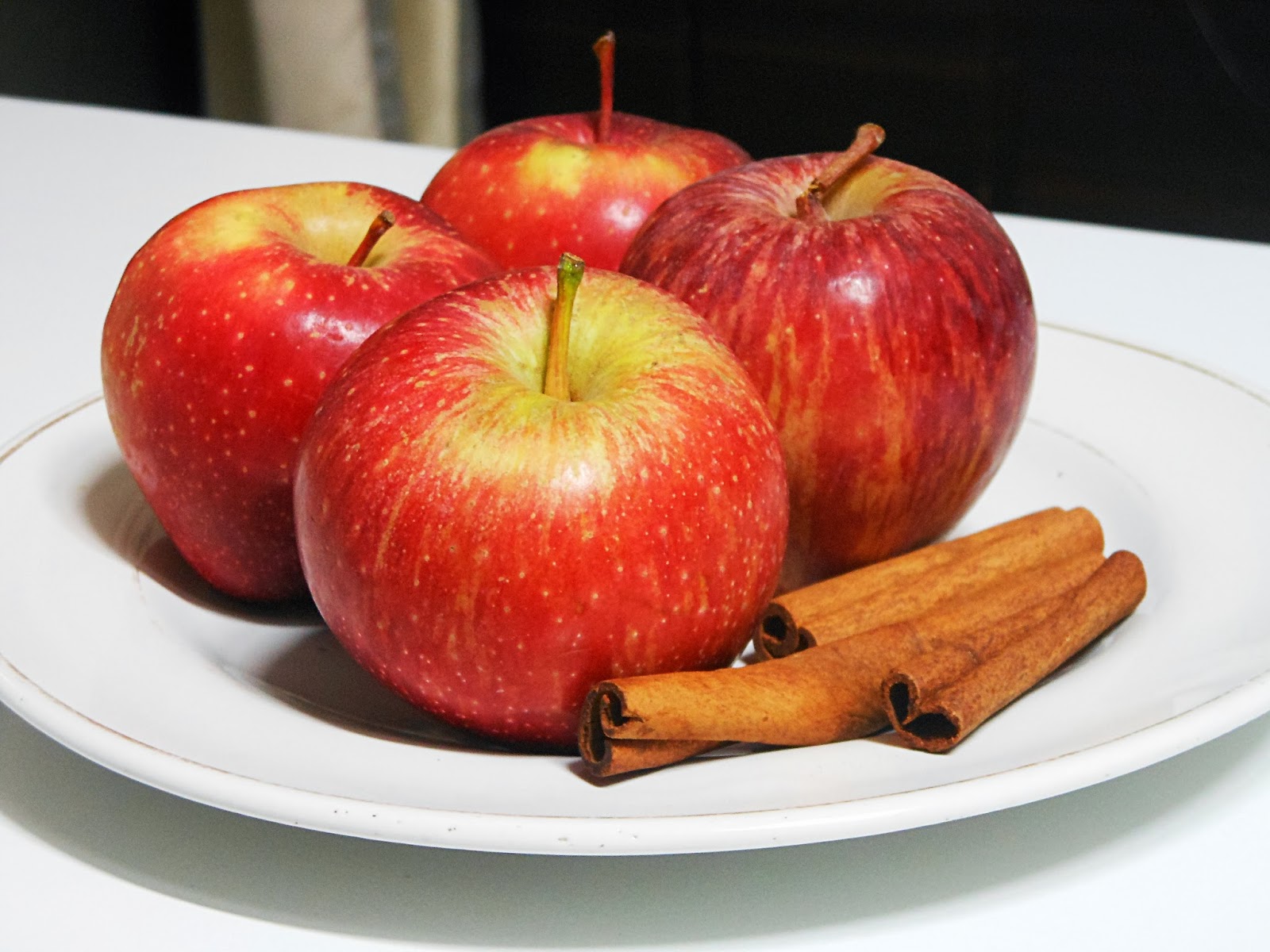
Apples and Cinnamon: My Inspiration
Apple and Cinnamon: Some more inspiration!


 After apple cinnamon oats, I now present my first ever attempt at making jam... apple cinnamon jam!

Presenting Apple Cinnamon Jam!

In this jam, the tartness of apples and the warmth of cinnamon are balanced out by the sweetness of sugar. It pairs amazingly well with toast and salted butter. A bottle of this jam can make a thoughtful handmade gift for someone too! 

Here is the recipe for this simple piece of joy!

Ingredients

500 gms apples
1/2 cup water
8 tbps sugar
1 tsp cinnamon powder
1/2 lemon juice

Method

Sterilise a glass bottle by washing it with soap and then boiling it with water for 15 minutes. Put the glass bottle in when the water is cold and you're heating it up. Putting a glass bottle in boiling hot water will cause it to crack!

Wash, peel and dice the apples in 1/2 inch cubes. You can grate them if you wish too. They are going to be mashed anyways to make the jam.

Diced apples

Heat a pan, add in the diced apples and 1/2 a cup of water. Stir it on a high flame for a couple of minutes till the water starts boiling and the apples start releasing their juices. Lower the flame and cover the pan till the apples cook through. This should take about 12-15 minutes but it is a good idea to keep checking the apples. 

Covering the apples to let them cook

Once the apples are cooked, remove the cover and use a potato masher to mash them thoroughly in the pan. Keep the flame low while doing this.


Mashing the apples in the pan

Now comes our flavour maker: add in the sugar evenly across the mashed apples. Keep the flame on low. Stir in properly and keep stirring so that the sugar doesn't burn till it is dissolved.
Stirring the sugar in

Once it is dissolved, you will need to stir it every 30 seconds. Do this till the jam starts leaving the sides of the pan and you have achieved the desired consistency of the jam. This should take about 10 minutes on the low flame. About a minute or so before you turn off the flame, or simply when the jam starts leaving the sides of the pan, add in the cinnamon powder and stir it in well. Don't put the cinnamon powder in too early as the flavour of cinnamon increases as you cook it and will become too strong and overpowering. 


Once you remove from the pan, cool the jam a little, add in the lemon juice and mix it in well.


Apply liberally on a buttered toast and serve your special handmade Apple Cinnamon jam with love!


Apple Cinnamon jam on a buttered toast


Thursday, 3 October 2013

Italian Style Tomato and Mozzarella Cheese Salad

A fresh salad simple salad that is best suited for an Italian countryside. Think of summery green fields, sunflowers, hillsides, a small cottage, farmers in the noonday sun and this fresh salad just completes the picture.

Tomato and Mozzarella Cheese Salad

For the salad

4-5 medium sized tomatoes diced
50 gms mozzarella cheese diced
10-12 black olives pitted and sliced

For the dressing

2 tbsps olive oil
2-3 garlic cloves chopped
2-3 basil leaves chopped
Salt to taste

Arrange the diced tomatoes, diced cheese and the olive slices on a plate. Mix the oil, garlic, basil and salt to make a dressing and pour it evenly over the salad. Refrigerate for 10-15 mins and serve chilled.


Wednesday, 2 October 2013

Dal Ke Parathe

We Indians always cook in additional quantities. The basic idea behind this is that if an unexpected guest ever comes over (which is quite common in our culture), there should always be something to offer to them. It is okay if there are leftovers, but food should never fall short for anyone. With this tradition comes generations of great food recycling ideas. Mothers have some of the best of these ideas! Dal ke parathe is one of them.

Since this trick to use up leftover dal is as traditional as it can get, the proportions presented just as traditionally - as guesstimates from experience.

Leftover Panchmel Dal
I had some leftover Marwari Panchmel Dal from last night's dinner that I used for this. The recipe for the Panchmel Dal can be found here

There are two more ingredients needed to make the parathas - whole wheat flour and salt. 

The transforming ingredients - flour and salt
A good estimate would be to use 1 1/2 cups of flour for every cup of dal.

I poured the dal in the flour and added some salt to it. Before adding any water, I used my fingers to thoroughly mix in the dry ingredients together. 

Dal and flour to knead the dough

You can use a little water (I used about 1 tbsp) for easier kneading of the dough. Once it has been knead, you can let it rest for 10 minutes. You will be able to see lovely flecks of the dal interspersed in the dough!

Resting the prepared dough

After the dough has rested, roll out parathas and roast them with a little oil on the tawa.

Roasting the parathas on the tawa
These are best had with a dollop of butter melting all over it!

Dal ke parathe with a dollop of butter


Tuesday, 1 October 2013

Thalipeeth

Thalipeeth, sigh. The name itself brings water in my mouth. There is a simple reason why... the flavours of the flour! The flour used for thalipeeth is called 'thalipeethachi bhajni'. The word 'bhajne' in Marathi literally translates to roast. Yes, you guessed it right, the flour is made by slow roasting rice, pulses such as chana dal, moong dal, urad dal, bajri, jowari, nachni and spices such as corriander seeds and cumin seeds individually and then grinding them together into a fragrant flour. This fragrance is also a great way to determine whether the flour is fresh or not.


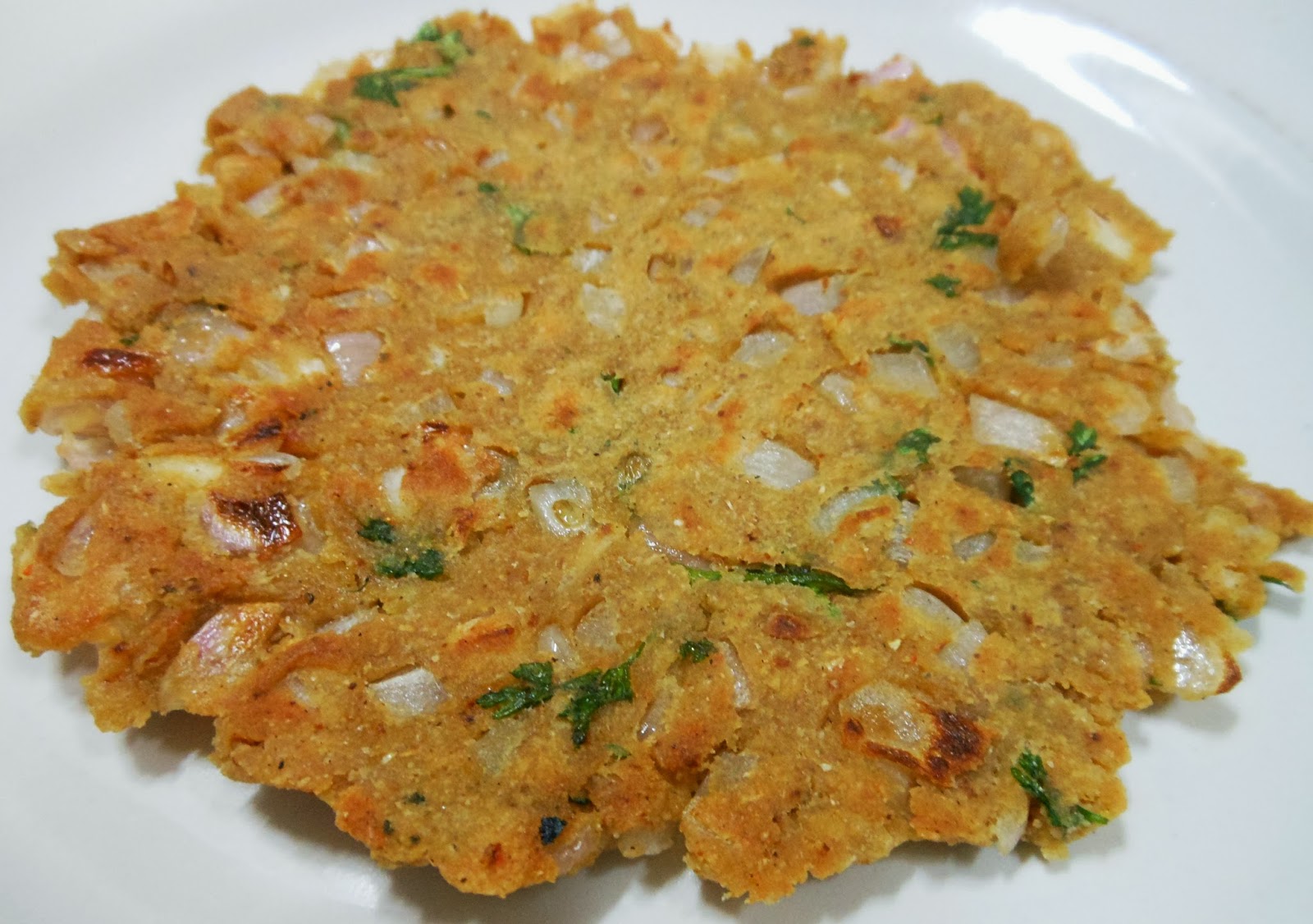
Thalipeeth is the flatbread made by flattening the dough prepared from the bhajni on a tawa using your fingers and then shallow frying it to give a crispy, golden brown flatbread. This beauty of a dish is crisp on the outside and a little soft on the inside. It has the flavours of slow roasted flours, onions and corriander. It makes for a great snack or main course. Thalipeeth is best enjoyed right off the tawa with loni (white butter).


Thalipeeth hot off the tawa... now where is that loni?


Ingredients

1 cup thalipeeth bhajni
1 medium onion finely chopped
2 tsps red chilly powder
10-15 corriander leaves finely chopped
Salt to taste
Water to knead the dough
Oil to shallow fry the thalipeeth

Method

Mix with your fingers a dry mixture of the bhajni, onion, red chilly powder, corriander leaves and salt. Add a little water and knead a firm dough. Let it rest for 15 minutes. Make balls of around 2 inch diameter with the dough.

On a cold tawa, put some oil and using your fingers flatten the ball from inside to the edges. Heat the tawa and shallow fry the thalipeeth till golden brown on both sides. It is best done on a medium flame, though it takes a little time, you will get perfect crispiness on both sides and the inside will also be cooked properly.

Eat it with white butter (loni).


Saturday, 28 September 2013

Pumpkin Parathas

Pumpkins are a wonderful vegetable. They are loaded with Vitamins such as Vitamin A, Vitamin B, Vitamin C and Vitamin E. They are also anti-oxidant rich and a storehouse of minerals like copper, calcium, potassium and phosphorus. Though they're so good for us, they are often off-putting to people who don't like their flavour or colour. Pumpkin parathas are a great way to make pumpkins a great delight to eat! I can vouch for this because when I shared these parathas with my classmates, one of them said that she hates pumpkins but these she could eat by the dozen!


Pumpkin Parathas

Ingredients

100 gms red pumpkin grated (it is called red but looks yellow)
1 1/2 cups whole wheat flour
2 tsps cumin powder
2 tsps red chilly powder
1 1/2 tsps garam masala powder
Salt to taste
Water to knead dough
Oil to cook parathas

Method

Take the grated pumpkin and the whole wheat flour on a big plate. Add in the salt, the cumin powder, the red chilly powder, the garam masala powder and the salt. Before adding the water to knead the dough, use your fingers to mix this dry mixture well together, so the spice flavour is even.

Add water and knead a firm dough. Remember, pumpkin releases some of its own juices so knead a firmer dough than you use, it will become softer over some time.

Roll out thin parathas and cook on a tawa with oil till both sides turn crispy.

Pack in your tiffins for a great treat!


Pumpkin Parathas packed in my tiffin!

Friday, 27 September 2013

Apple Cinnamon Oats

An apple a day keeps the doctor away. But it can get too boring to eat the same apple in the same way everyday. It has happened to me so I tried my hand at creating something new from the same old apple. And voila! I thought why not use apple with its best spice partner cinnamon in my morning oats? The dish turned out to be good, so here I am sharing away the recipe.


Apple Cinnamon Oats


Apple Cinnamon Oats

Ingredients

3 tsps plain oats
1 1/2 cups milk
1/2 apple cut into thin small slices or grated
1 pinch cinnamon powder
2 tsps sugar (or more if you prefer)

Method:

Put the milk and oats to heat in a deep pan. Add in the apple pieces and sugar. Let the milk come to a boil.

Lower the flame and let the oats cook in the milk. About a couple of minutes later add in the cinnamon powder. The oats will take another minute on the lowered flame after that to cook through.

Serve garnished with a slice of apple. Enjoy a healthy and filling breakfast!


Wednesday, 25 September 2013

Mag ni Dal na Pudla

Based on the response to my post from day before yesterday on Soam, it seems that Gujarati food is quite popular among people! Here is a simple, tasty recipe straight from a Gujarati kitchen: Mag ni dal na pudla. Mag ni dal na pudla have only 4 ingredients in it and can be eaten by Jains as they have no onions or garlic. They are a versatile dish tat make for a very tasty breakfast, afternoon snack or a filling main course too! As they are made of green mung dal with the skins still on, they are very nutritious and a great source of protein and fibre.

There are versions of this recipe from different regions of India. In Marwari kitchens and on Calcutta streets (because of the Marwari influence in Calcutta) they are called moong dal cheelas. Moong dal cheelas, served smeared with different types of chutneys like garlic chutney and corriander chutney, are quite a popular street snack in Calcutta (after puchkas, of course!). In  Andhra kitchens there is Pesarratu dosa which is served for breakfast with upma. Pesarratu dosa however is made with whole moong and have chopped garlic and onion in it, whereas Mag ni Dal na Pudla are made with moong dal and have no onions or garlic. 


Mag ni Dal na Pudla


Mag ni Dal na Pudla

Ingredients

1 cup green moong dal (with skins)
1/2 inch ginger roughly sliced
1-2 green chillies cut into 4/5 pieces each
Salt to taste
Oil to cook

Method

Soak moong dal overnight (about 6 hours at least). Drain all additional water from the dal. 

In a blender, blend the soaked dal with the roughly sliced ginger and green chilly pieces and salt. Add a little bit of water (about 2-3 tbsps) so that it forms a smooth batter of dosa batter consistency. 

On a tawa, heat oil, spread the batter using a ladle such that it forms a crepe thicker than a dosa. Cook till it turns golden brown and easily comes off the tawa. Flip over and cook till it turns crispy on the other side.

Serve with your favourite chutney or ketchup or enjoy just as it is!


Golden brown and crispy: Mag ni Dal na Pudla!